
While other states work to restrict individuals’ reproductive rights, Michigan Senate Democrats hear testimony and personal perspectives on legislation to expand access to contraception
Somewhere in Michigan, there is a woman struggling with endometriosis who regularly misses work because of intolerable pain. Somewhere in Michigan, there is a woman who wants to be a mother one day but wishes to finish her degree and secure a stable job first. Somewhere in Michigan, there is a woman who just welcomed a new baby into the world whom she wants to spend time with before continuing to grow her family.
Whether it’s utilized to meet family planning goals or treat health concerns, contraception is a powerful tool for ensuring that women and individuals who can become pregnant have the power to plan their own course in life. Each and every Michigander — regardless of race, place, or socioeconomic status — deserves to have safe, affordable access to the full range of contraceptive options available.

Despite being named one of the 10 greatest public health achievements of the 20th century by the Centers for Disease Control and Prevention, contraception is not easily accessible for many women. A national survey estimates nearly one-third of adult women who have tried to access prescription contraception experience barriers, citing financial concerns, challenges in obtaining an appointment, and more.
The introduction of over-the-counter (OTC) contraception has the ability to address many of these challenges, and with the first OTC oral hormonal contraceptive recently approved by the Food and Drug Administration, there is no time like the present to break down financial barriers to OTC contraceptives and emergency contraceptives — and Michigan Senate Democrats are wasting no time.
Watch the full Senate Health Policy Committee hearing on Senate Democrats’ Freedom to Plan and hear from legislators, doctors, health experts, patients, students, and advocates.
While federal law requires Medicaid and most private health insurance plans to cover FDA-approved contraceptive methods with a prescription, there is no federal requirement that plans cover nonprescription contraception — leaving many individuals without the ability to access the care they need. To rectify this issue, Sens. Mary Cavanagh and Jeff Irwin introduced the “Freedom to Plan Act,” which would require private insurers and Medicaid to provide point-of-sale coverage for OTC oral hormonal contraception and emergency contraception.
This enhanced access to contraception can make a major impact on Michiganders’ everyday lives. For individuals struggling to make ends meet, this policy could save them $20 a month, which could go towards putting food on the table or heating their home. And if you multiply that across a person’s reproductive life, it adds up to thousands of dollars saved. For students who don’t have access to transportation on campus or who are juggling a job while working toward their degree, this legislation allows them to access contraception without jeopardizing their health or their studies.

In addition to breaking down barriers to OTC contraception, Senate Democrats are also working to ensure more inclusive postpartum access to long-acting reversible contraception methods like intrauterine devices (IUDs) and implants. While postpartum contraception may not be at the top of mind for new mothers, implanting an IUD is a safe, effective strategy they can choose to help improve maternal health and reduce the likelihood of becoming pregnant again before they’re ready.
This strategy is also highly convenient as postpartum appointments can be difficult to navigate with a newborn. The American College of Obstetricians and Gynecologists found that 40% of people don’t attend any postpartum appointments, with many women citing time constraints and financial barriers as primary concerns. By having an IUD implanted after labor and before leaving the hospital, women can cross one more thing off their to-do list so they can focus on what matters most: spending time with their new baby.
Sen. Mallory McMorrow shares her experience navigating the challenges of new motherhood and how access to postpartum contraception can reduce the likelihood of an unintended short interval pregnancy, while improving maternal health.
Despite the proven benefits postpartum contraception provides, this service is not included in most health plans’ Labor and Delivery bundle, meaning patients must pay out-of-pocket costs upwards of $1,300. The personal cost burden leaves this service out of reach for many families across Michigan.
To ensure no family is forced to forgo vital postpartum care due to cost constraints, Sen. Mallory McMorrow introduced legislation that would require private insurers and Medicaid to cover the placement of long-acting reversible contraception and accompanying anesthesia services immediately following labor. Together with legislation that would require hospitals to stock IUDs, this package would ensure that Michiganders have both coverage and access to postpartum contraception so they can grow their families on their own terms, without interference from politicians or insurance companies.
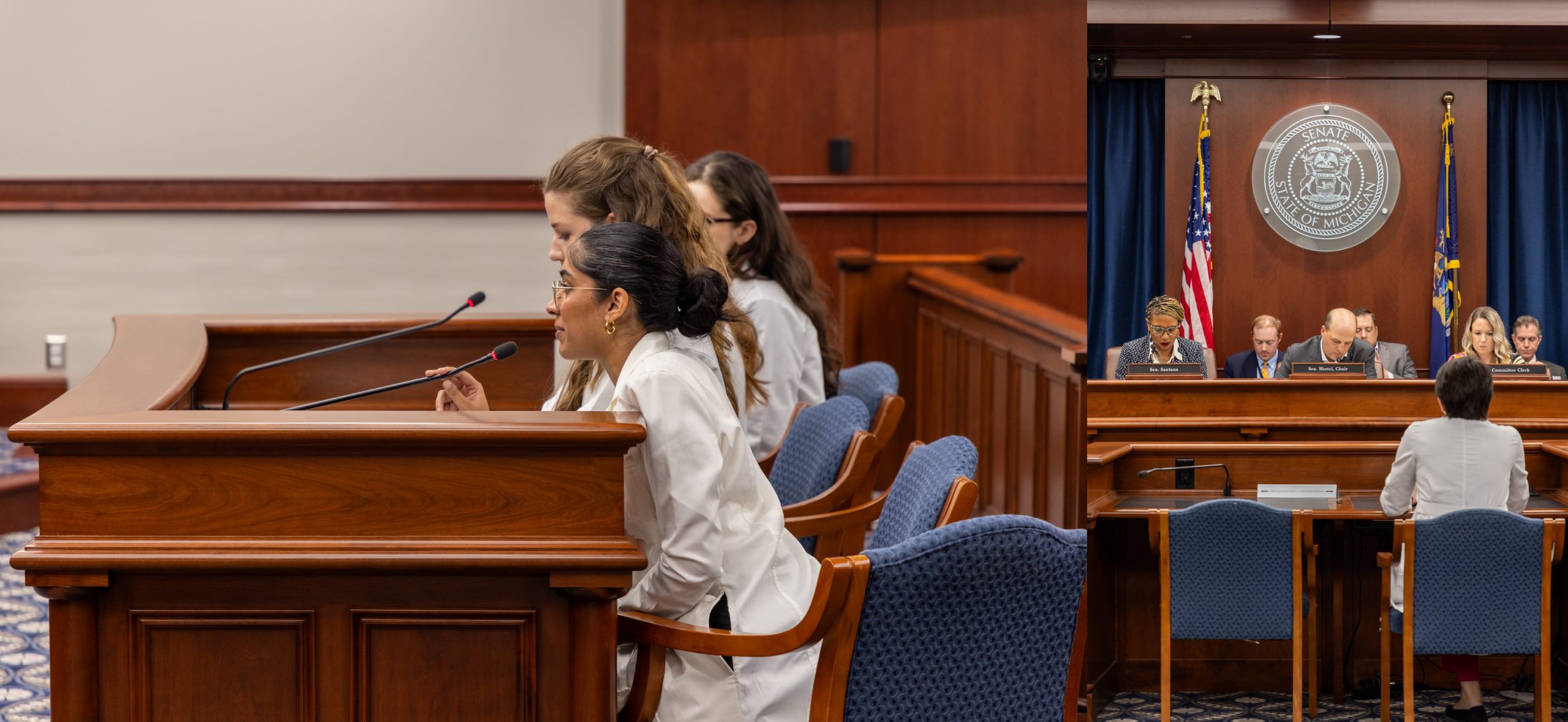
Recently, the Senate Health Policy Committee heard testimony on the “Freedom to Plan” package from a diverse range of Michiganders including bill sponsors, doctors, advocates, and patients. Among those who provided their valuable insights on the positive impact this legislation would have on Michigan families were experts from the American College of Obstetricians and Gynecologists (ACOG), Planned Parenthood of Michigan, and the Michigan Organization on Adolescent Sexual Health.
In response to the hearing, Sen. Kevin Hertel, Chair of the Senate Health Policy Committee, said, “We’ve seen time and time again that Michiganders do not want politicians interfering with personal decisions regarding their health and their family. Today, we’re listening to them and taking steps to ensure the freedom to plan isn’t just afforded to a select few, but to every family here in Michigan.”
Dr. Sarah Wallett
Dr. Shira Fishbach
Dr. Jordan Fletcher
Senate Democrats also took this policy from the committee room in Lansing directly into communities across the state by hosting a series of virtual town halls aimed at engaging Michigan residents on the topic of reproductive freedom. Discussing the bills within the context of civil rights and reproductive health advocacy, panelists from ACOG and Planned Parenthood joined legislators to breakdown the technical scope of what the Freedom to Plan package would accomplish. Hearing personal narratives from constituents and healthcare providers, Senate Democrats and their constituents gained insight into the real human impact this legislation will have on Michiganders in every corner of the state.

As Senate Democrats look to advance these bills through the legislative process, we need your help — your voice is crucial in this fight. From adding your name as a supporter and sharing your personal reproductive health story to amplifying the policy on social media and connecting with your elected officials, you can help ensure all Michiganders have the autonomy and power to grow their families on their own terms.
Check out our Freedom to Plan Toolkit to find ready-to-share social content, messaging guidance, and more. Together, we can shape a future where everyone has the fundamental freedom to make decisions about their own body.
Read more from the Michigan Senate Democrats at SenateDems.com/press.